 We will be presenting 4 long papers at CHI’15 in Seoul, Korea, including an Honorable Mention for Best Paper, marking the top 5% of all papers, congratulations Rohit and team! We will also present a Work-in-Progress, an Interactivity exhibit, and a Special Interest Group:
Khot, R., Lee, J., Hjort, L., Aggarwal, D., Mueller, F. TastyBeats: Designing Palatable Representations of Physical Activity. CHI 2015. Long paper. 10 pages. BEST PAPER HONORABLE MENTION
Mueller, F., Muirhead, M. Jogging with a quadcopter. CHI 2015. Long paper. 10 pages.
Jensen, M.M., Rasmussen, M.K., Gronbaek, K., Mueller, F. Keepin’ it Real: Challenges when Designing Sports-Training Games. CHI 2015. Long paper. 10 pages.
Curmi, F., Whittle, J., Ferrario, M.A., Mueller, F. Crowdsourcing Synchronous Spectator Support: (go on, go on, you’re the best)n-1. CHI 2015. Long paper. 10 pages
Khot, R., Pennings, R., and Mueller, F. EdiPulse: Supporting Physical Activity with Chocolate Printed Messages. CHI 2015. Work in Progress. 6 pages.
Khot, R., Pennings, R., and Mueller, F. EdiPulse: Turning Physical Activity Into Chocolates. CHI 2015. Interactivity. 4 pages
Mueller, F., Khot, R.A., Marshall, J., Nylander, S., Tholander, J. Understanding Sports-HCI by Going Jogging at CHI. CHI 2015. SIG Special Interest Group (organizing). 4 pages
28
MAR
Share

 We have a new publication from HCI International 2015 from Florian Lachner’s visit to the lab:
 CHI PLAY’15 in London will include the following works from us, incl. a Best Paper Nomination:
 The
The  Floyd is giving a talk and runs a design jam in Launceston at the Queen Victoria Museum as part of Science Week:
 In addition to the extensive media coverage Rohit received with his research, he is now also featured on the RMIT frontpage with his
  Sarah Jane Pell tweeted that she is ok at Everest Basecamp, our thoughts go to everyone affected by the earthquake.
 We are offering a workshop at the 6th International UBI Summer School 2015 in Oulu, Finland, based on the excellent results from last year: Floyd and Rich are organizing a workshop on “Designing Games for the Body”:
 Rohit received a prestigious IBM PhD Fellowship, an outstanding achievement!
 Rohit and Jeewon presented their work at TEI’15 at Stanford, USA, it was a great show, congratulations! Floyd was co-chair of the technical program, introducing a best paper award to grow the community.
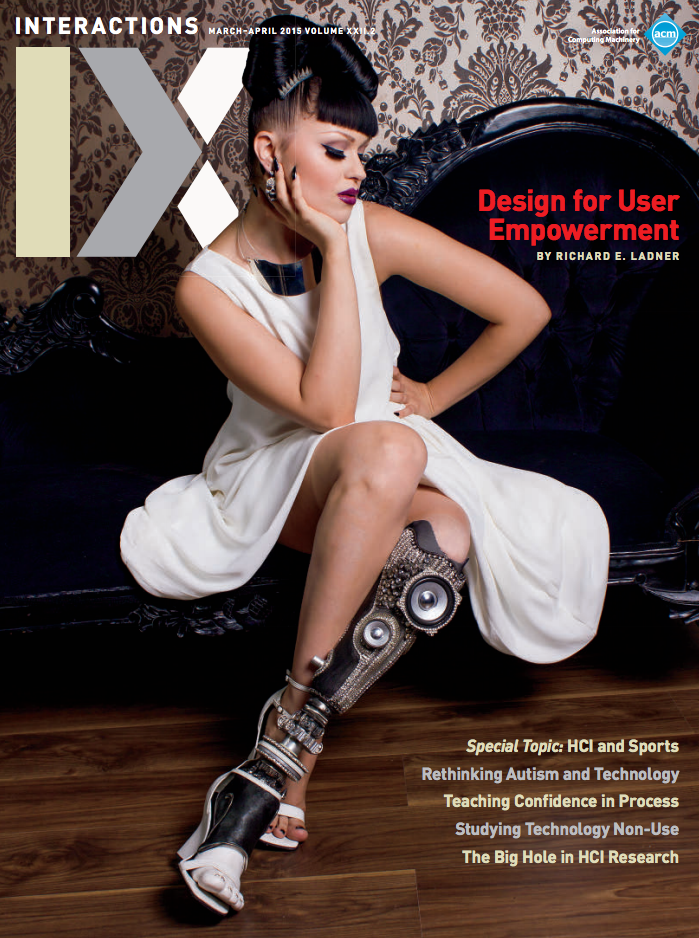 There are two new articles in the interactions magazine that highlight the great work that came out of the workshop at CHI last year, congratulations Mads who did an excellent job there:
 2 new journal articles appeared in the “Games for Health” journal, especially the first one summarizes a lot of the work coming out of the lab directly; congratulations David and Rohit for their involvement:


 There are several great publication successes to report. They occurred at the end of last year, so the announcement comes in a batch, but nevertheless congratulations to everyone involved! Mads presented at OzCHI in Newcastle, Australia, Jayden at CHI PLAY in Toronto, Canada (with Rich also having a co-authored paper there), Rich presented at ICEC and so did Will at IE (Interactive Entertainment) in Sydney, and David from HitlabNZ presented our collaborative paper at ACE (Advances in Computer Entertainment Technology) in Funchal, Madeira. Well done everyone!
 We have a new publication: